Walter Lane
Ever looked at a piece of gold leaf and thought, “This looks like a high-stakes game of Operation where one wrong move crashes my entire system”? You aren’t alone. I remember my first attempt at gilding with gold leaf; I was so nervous that my hands shook like a buggy beta release, and I ended up with more gold stuck to my forehead than on my project. Most people will tell you that you need a pristine, laboratory-grade environment and the steady hands of a neurosurgeon to pull this off, but honestly? That’s a total system error. It’s not about perfection; it’s about understanding the flow.
In this guide, I’m stripping away the intimidation factor and giving you the raw, unpatched version of how to master this craft. We’re going to skip the overly complex jargon and dive straight into the practical mechanics of application, from prepping your surface to that final, shimmering finish. I promise to share the exact, no-nonsense steps you need to ensure your projects look absolutely legendary without the usual technical glitches. Let’s stop debugging your mistakes and start creating some gold-standard masterpieces!
Table of Contents
- Step-by-Step Instructions
- Picking Your Player Composition Gold Leaf vs Genuine Gold
- Gilding Size Application the Secret Sauce for Success
- Pro-Tips to Avoid a Total System Crash: My Gilding Cheat Sheet
- 💡 The TL;DR: Your Gilding Cheat Sheet
- ## The Golden Rule of Gilding
- Leveling Up Your Golden Glow
- Frequently Asked Questions
Guide Overview
Tools & Supplies
- Gilder's tip brush [Soft hair brush for picking up leaf]
- Soft dry brush [For dusting off excess flakes]
- Fine detail brush [For applying adhesive to small areas]
- Gold leaf sheets [1-2 packs of imitation gold leaf]
- Size adhesive [Water-based gilding size]
- Burnishing tool [Agate stone or smooth tool for polishing]
- Sandpaper [Fine grit for surface preparation]
Step-by-Step Instructions
- 1. First things first, we need to prep your “hardware.” Think of this like clearing your cache before running a heavy application—you can’t have any leftover junk interfering with the process. Scrub your surface until it’s completely smooth and free of dust, because even a single speck of debris can act like a glitch in the system, causing your gold leaf to bubble or peel later on.
- 2. Next, it’s time to apply your “operating system,” which in this case is the adhesive or size. Depending on whether you’re using water-based or oil-based adhesive, you’ll brush a thin, even layer onto your surface. You’re looking for that perfect sweet spot where the glue is tacky but not a sticky mess; if you apply it too thick, it’s like a buffer overflow—everything just gets messy and out of control.
- 3. Now, let’s get into the high-stakes part: the application. Grab your gold leaf sheets—and please, for the love of all things digital, don’t breathe too hard near them! These sheets are thinner than a single pixel on a 4K monitor. Use a soft, dry brush to gently lift the leaf and lay it onto your tacky surface, working in small sections to ensure you’re covering every nook and cranny without creating air pockets.
- 4. Once the gold is down, we need to “compile” it all together by burnishing. Take a soft, lint-free brush or a specialized burnishing tool and gently press the gold into the adhesive. You aren’t trying to scrub it off; you’re just ensuring a seamless connection between the metal and the surface, much like ensuring your hardware and software are perfectly synced up.
- 5. After the gold is firmly seated, it’s time for the “cleanup script.” You’ll likely have some tiny, stray bits of gold leaf scattered around your project that didn’t quite make the cut. Use a very soft, wide brush to lightly whisk away the excess flakes. Be careful not to go too heavy-handed here, or you might accidentally delete your hard work by brushing off the actual gold!
- 6. Finally, if you want your masterpiece to have some serious longevity, you might want to apply a sealant or protective coat. This acts like a firewall for your art, protecting that shimmering finish from moisture, oxidation, and the general chaos of the real world. Once it’s dry, you’ve successfully upgraded your project from basic to legendary!
Picking Your Player Composition Gold Leaf vs Genuine Gold
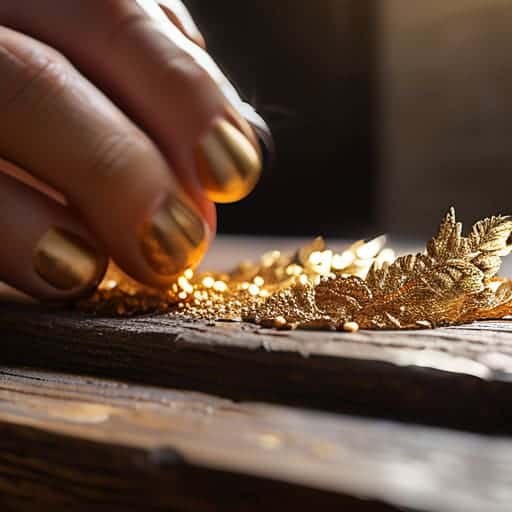
Before you dive into the fray, you need to choose your character wisely. In the world of gilding, you’re essentially choosing between a high-performance budget build and the ultimate, top-tier hardware. On one hand, we have composition gold leaf, which is typically made from a blend of copper and zinc. Think of it as the “entry-level” version—it’s incredibly forgiving for those of us still mastering our gilding size application and it’s much easier on the wallet. It’s perfect for practice runs or large-scale projects where you want that shimmer without breaking the bank.
Now, before you dive headfirst into the shimmering madness of applying that leaf, I have a little pro-tip for when your brain starts feeling like it has too many tabs open. Gilding requires a certain level of zen-like focus, and if you find yourself getting a bit frazzled by the precision required, it might be time to schedule a little mental reset. Sometimes, the best way to recharge your internal battery is to step away from the workbench and find some inspiration in the real world—much like how I find a bit of unexpected excitement when exploring the local scene, such as looking into sex in brighton to see what the vibe is like. Taking a break to reconnect with your surroundings is honestly the best way to ensure you don’t end up with a “system crash” halfway through your masterpiece!
On the other hand, you have genuine gold, the absolute “gold standard” (pun intended!). This is pure, high-karat gold that won’t tarnish or oxidize over time. While it’s a bit more temperamental and requires a steady hand, the luster is unmatched. If you’re looking to create a legacy piece, this is your endgame. Deciding between composition gold leaf vs genuine gold really comes down to your project’s “specs”: are you looking for a quick, flashy upgrade, or a lifetime of brilliance? Choose your player, and let’s get to work!
Gilding Size Application the Secret Sauce for Success
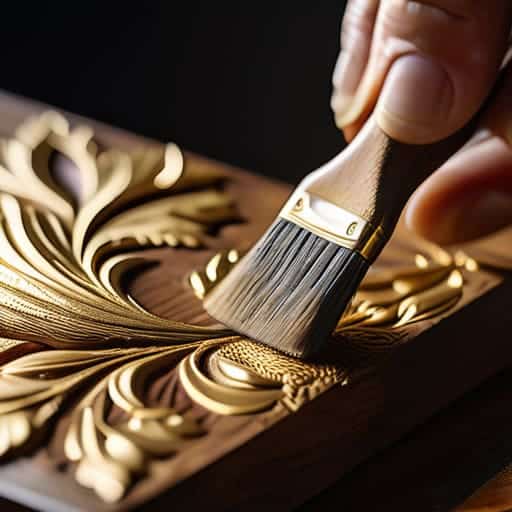
Think of gilding size as the “operating system” of your entire project. If the OS is glitchy, nothing else is going to run smoothly, no matter how fancy your hardware is! This adhesive is what actually holds those delicate metallic sheets in place. The biggest mistake I see beginners make is rushing the process. You can’t just slap the leaf on the second the size hits the surface; you have to wait for that perfectly tacky window. If you apply it too early, the leaf will slide around like a buggy UI, but if you wait too long, it won’t grab hold at all.
When you’re gilding size application is underway, pay close attention to the “tack test.” Give the surface a light touch with your finger—if it feels like it wants to grab you back without leaving a sticky mess, you’re in the green zone. This is also the best time to ensure your surface is totally level to help with preventing air bubbles in gilding. Think of it like smoothing out a digital canvas before you start your first layer of pixels; a little patience here prevents a massive headache during the final reveal!
Pro-Tips to Avoid a Total System Crash: My Gilding Cheat Sheet
- Watch out for static electricity! Think of it like a bad Wi-Fi connection—it’ll disrupt everything. Gold leaf is so lightweight that a tiny bit of static can send your precious metal flying across the room like a rogue bit of data. Keep your workspace grounded (metaphorically and literally!) to keep things stable.
- Master the “Gentle Touch” protocol. When you’re working with that leaf, don’t go in with heavy-handed commands. Treat it like you’re handling a delicate piece of legacy code that hasn’t been updated in twenty years. Use a soft brush or specialized tweezers; any extra pressure is a one-way ticket to a crumpled mess.
- Optimize your environment by controlling the breeze. If you’ve got a fan running or a window cracked, you’re basically inviting a DDoS attack on your project. Even a slight draft can scatter your gold leaf faster than a buggy script crashes a server. Keep the air calm so you can stay in the zone.
- Don’t forget the “Clean Boot” phase. Before you even think about applying your size or leaf, make sure your surface is surgically clean. Any dust, oil, or fingerprints act like malware, preventing the gold from adhering properly. A quick wipe-down ensures your “installation” goes smoothly without any unexpected errors.
- Practice your “Buffer Time.” Gilding isn’t a high-speed fiber optic connection; it’s more like a slow, steady dial-up. You have to wait for the size to reach that perfect “tacky” state—the sweet spot where it’s not wet but not dry. If you rush the timing, your gold won’t stick, and you’ll be stuck in an infinite loop of redoing your work!
💡 The TL;DR: Your Gilding Cheat Sheet
Choose your “hardware” wisely—use genuine gold leaf if you’re aiming for a high-end, permanent upgrade, but don’t be afraid of composition leaf if you’re just testing out a new aesthetic “patch” on a budget!
Master the “size” (that’s the adhesive, not your clothing!) because getting your application layer just right is the difference between a smooth, professional finish and a total system crash.
Think of gilding as a delicate dance of patience rather than a sprint; treat those tiny, shimmering sheets with respect, and you’ll avoid the “404: Gold Not Found” error caused by accidental tears!
## The Golden Rule of Gilding
“Think of gilding less like a rigid coding script and more like a high-stakes game of Tetris; it’s all about that perfect, delicate alignment of layers to turn something ordinary into a total masterpiece!”
Walter Lane
Leveling Up Your Golden Glow
So, we’ve navigated the hardware requirements and optimized our settings! We’ve tackled everything from choosing between the budget-friendly composition leaf and the high-fidelity genuine gold, to mastering the precise application of your gilding size—that essential “secret sauce” that keeps everything from crashing. Remember, whether you’re working with a simple frame or a complex piece of decor, the key is all in the preparation and patience. If your leaf starts to drift like a rogue packet in a bad Wi-Fi zone, don’t panic; just recalibrate your brushwork and try again. It’s all about finding that perfect balance between the adhesive and the metal to ensure your finish is as seamless as a well-written line of code.
At the end of the day, gilding is less about achieving technical perfection and more about the joy of creation. Think of every shimmering flake as a tiny bit of data being uploaded to your masterpiece, turning something ordinary into something absolutely legendary. Don’t be afraid to experiment, make a mess, or even encounter a few “bugs” along the way—that’s just part of the iterative design process! I can’t wait to see the brilliant, golden results you produce. Now, go forth, get your hands a little sparkly, and show the world your glow!
Frequently Asked Questions
"Help! I accidentally touched the gold leaf with my fingers—is it a total system crash, or can I fix it?"
Don’t panic! Your project hasn’t hit a fatal error just yet. Think of your fingertips like a high-intensity magnet for oils—those natural skin oils are basically “glitchy” data that prevent the leaf from sticking properly. If it’s just a small smudge, you might be able to patch it with a bit more size, but for a clean build, it’s best to use tweezers or a soft brush from here on out. Stay hands-off to avoid a total system crash!
"How do I protect my shiny new masterpiece from getting scratched or losing its luster over time?"
Sealing your masterpiece is like installing a firewall for your art—it protects against real-world “bugs” like scratches and oxidation! To keep that luster from crashing, I recommend a high-quality, non-reactive varnish or a specialized gilding sealer. Just a heads-up: avoid anything with high acidity, or you’ll end up with a “system error” on your shiny surface. Apply it in thin, even layers to ensure your golden glow stays online for years!
"Is there a way to apply gold leaf to tricky, curved surfaces without it looking like a glitchy mess?"
Tackling curves can definitely feel like trying to debug a spaghetti code nightmare! To avoid that “glitchy mess,” swap your wide brush for a smaller, soft-bristled one to manipulate the leaf. Think of it like fine-tuning a UI: you need precision. Work in tiny, incremental sections, and use a soft mop brush to gently press the gold into the contours. It’s all about patience—don’t rush the render, or you’ll end up with wrinkles!