 DigiDummysAdmin
Did you know over 40% of homeowners use smart appliances like refrigerators and washing machines? The move to automated homes is more than a trend. It’s a big change in how we live. From the first electric vacuum in the 1920s to today’s voice-activated systems, home automation has grown a lot.
Technology keeps improving our homes. I’m excited about how these changes are making our lives better. Smart devices make our homes more comfortable, save energy, and keep us safe. Let’s look at how automated homes have evolved, the key technologies behind them, and the benefits they bring to our lives.
Key Takeaways
- Automated homes make our lives easier with smart technology.
- The Internet of Things (IoT) has changed how we handle home tasks.
- Keeping our homes safe and private is very important.
- Home automation helps us use less energy and live more sustainably.
- Smart devices let us customize our living spaces to fit our needs.
The Evolution of Automated Homes
The journey of home automation is filled with exciting milestones. It shows how far we’ve come and hints at what’s next. The first automated systems, like the electric vacuum cleaner in the 1920s, set the stage for today’s advanced tech.
Historical Context of Home Automation
The history of home automation began with key inventions. The 1970s saw the birth of X10 technology, a major breakthrough. It allowed us to control devices remotely through electrical wiring, starting a new era in home automation.
Milestones in Home Automation Technology
The 1980s and 1990s brought big changes in home automation. Devices like The Clapper, which turned on by sound, were introduced. Companies like Apple and Amazon created integrated systems, meeting our growing need for smart homes.
Inception of IoT and Its Impact on Automated Homes
The 2010s saw a big leap with the rise of IoT. Voice assistants like Amazon Alexa and Google Assistant became popular, making our homes smarter. Standards like Zigbee and Z-Wave helped devices work together better. Now, we’re looking at even more exciting tech like AI, AR, and blockchain to change our homes even more.
Understanding the Technology Behind Automated Homes
The heart of automated homes is advanced technology for a smooth experience. IoT device integration is key, letting devices talk and work together well. This makes smart homes more useful and easy to use.
Integration of IoT Devices
IoT devices are the base of home automation, adding many functions to gadgets. Protocols like WiFi and ZigBee help devices connect. This setup lets users get solutions that fit their home needs perfectly.
Smart Home Hubs and Their Functionality
Smart home hubs, like Amazon Echo, act as central controllers. They manage different smart techs, making it easier to use them. Google Assistant is known for its 92.90% accuracy, making it popular for homeowners.
Examples of Smart Home Technologies
Smart techs show what automated homes can do. For example, Nest thermostats can save up to 12% on heating and cooling. These smart solutions make homes more comfortable and save money on bills.
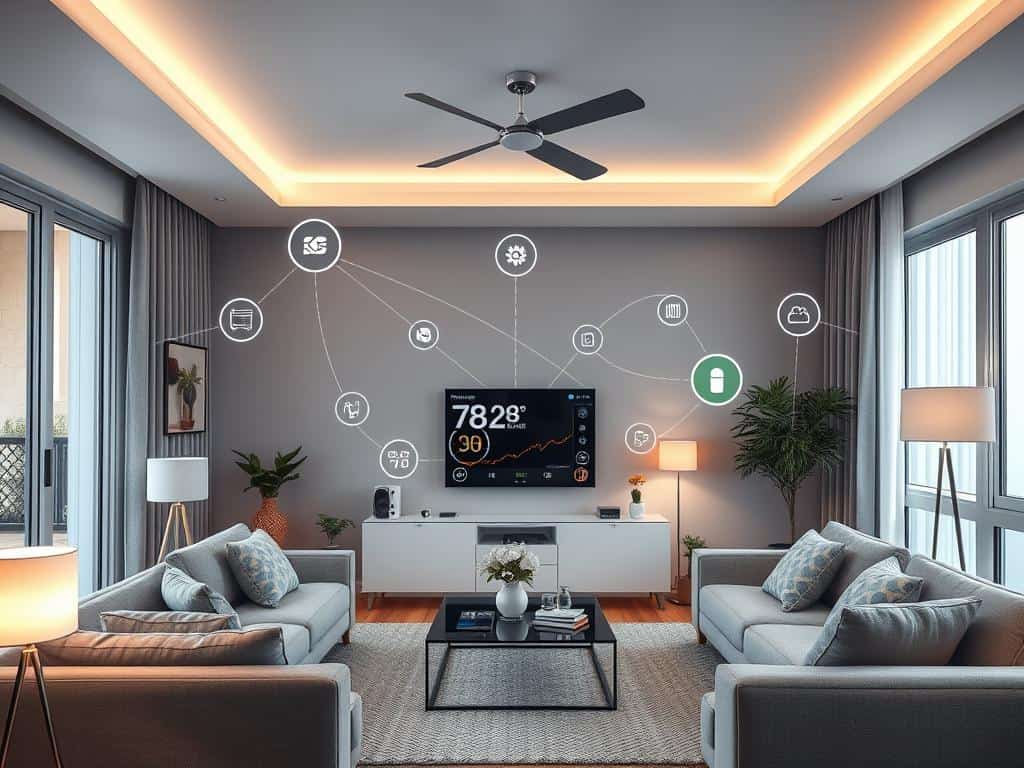
Key Features and Benefits of Automated Homes
Automated homes bring a new level of convenience to our lives. They blend technology with our daily routines. These homes offer many benefits, from making our lives easier to keeping us safe.
Enhanced Convenience and Efficiency
Smart homes are all about convenience and efficiency. You can control your home devices with just a few taps on your phone. This makes everyday tasks like adjusting the thermostat or locking doors easy and quick.
It also helps save energy and money. By automating your home, you can use less energy and cut down on costs.
Personalized Living Experience
Smart technology lets you create a home that’s just right for you. You can adjust things like lighting and temperature to your liking. Plus, with voice assistants, controlling your home is as simple as saying a few words.
Benefits of Smart Security Systems
Automated homes also mean better security. They come with features like motion sensors and smart locks. These keep your home safe, even when you’re not there.
With remote monitoring, you can stay updated on your home’s security. You’ll get alerts for any unusual activity, giving you peace of mind.
Sustainable Living Practices Through Automation
Automated homes also support sustainable living. They help you use energy more efficiently. By controlling your HVAC systems remotely, you can save energy and money.
This approach to living is good for the planet. It shows your commitment to a greener future.
Conclusion
The rise of automated homes is changing how we live, thanks to technology and new tastes. We’re seeing homes that are not just convenient but also good for the planet. This shift is made possible by smart technologies and IoT devices.
Now, we have smart home solutions for all budgets, from simple smart plugs to top-notch security systems. This shows how people are starting to accept these new ways of living. It’s a big change in our daily lives.
Features like personalized living and smart security are becoming more common. By choosing smart home solutions, I can make my life better and help the environment. Brands like Philips Hue and Frontpoint offer great options for a connected, efficient, and safe home.
The future of automated homes looks promising. With advancements in Z-Wave and Zigbee, our homes will work together better than ever. I’m looking forward to how these changes will shape our homes, making them more sustainable and fitting for today’s lifestyles.


 Walter Lane