 DigiDummysAdmin
Did you know AI-created artworks are now sold for thousands? Some even go for more than $432,000 at auctions. This shows a big change in our view of creativity and art in this digital era. Exploring AI Art reveals a shift that questions old ideas about how art is made.
Like long ago when photography arrived, it faced doubt but later changed art completely. AI art is doing the same today.
The rise of AI Art mixes technology with creativity, creating new ways to express. AI helps artists and machines work together, making art more accessible. I aim to show why trending in AI art matters for microentrepreneurs and creative minds.
While traditional art still holds a special place, AI-made art makes us think differently about what’s authentic and unique. It’s fascinating how tech and creative minds can come together. This blend can make human art more striking and inspiring.
Key Takeaways
- The collaboration between artists and AI has produced projects like The Next Rembrandt Project and Google’s DeepDream.
- AI tools in art-making are democratizing creativity and exploring new forms of expression.
- Ethical questions surrounding authorship and ownership in AI-generated art are increasingly important.
- Collectively, AI artworks have sparked debates on whether they can be considered truly creative.
- Historical resistance to new technologies mirrors current sentiments about AI in the art world.
- The rise of humanoid artists like Ai-Da emphasizes the blending of human creativity and AI capabilities.
- Increasing appreciation for traditional art forms highlights their value within a digitized landscape.
The Emergence of AI Art
AI-generated art is changing the art scene, thanks to technological advances. Tools like DALL-E 2, Discord, and Midjourney introduce new ways to make art. They look at tons of data to make art that makes us rethink creativity.
Understanding AI and its Role in Art Creation
The journey of AI in art started in the mid-20th century with computer-made art. Since then, researchers have made big leaps, like neural networks in the 1960s and art programs like AARON in the 1980s. Now, AI has gotten even better, with GANs making more detailed art. Artists today see AI not just as a tool but as a partner, blending human ideas with machine power.
How AI Artwork Generators Challenge Traditional Notions of Creativity
AI art makes us rethink what art truly is. It brings up questions of who really makes the art. Artists like Harold Cohen and Mario Klingemann show how AI can bring new ideas. People are both excited and unsure about AI in art. Some think AI can teach us, while others say the human touch is key.
The Intersection of AI and Human Artistry
Artists and AI working together create new chances for innovation, changing how art is made. This partnership gives artists advanced tools. These tools help them see their art in new ways. It lets them try new things and explore different artistic areas. AI helps with creativity instead of taking the place of human talent.
Collaborative Opportunities between Artists and AI
Since the year 2000, AI has grown a lot, leading to new machine learning breakthroughs. This growth lets artists use AI in their work, adding to their creativity. In music, AI helps create songs that touch people’s emotions. It brings surprises and catches the audience’s interest. Artists in visual fields use AI to go beyond usual beauty ideas. This lets them try new shapes and styles that were once not accepted. These partnerships lead to novel art, opening new paths for innovation and ways to express ideas.
AI as a Tool for Artistic Exploration and Innovation
AI is like a new space for artists to try out ideas in many areas. Writers use AI for coming up with ideas and writing drafts, keeping their work original. In fashion, AI predicts trends and supports designers. It acts as a forward-thinking partner in a very changing field. Architects use AI to think of new building designs that go past old ideas. AI blends human emotion with its efficiency to make a unique space for new ideas. It helps artists dream big again.
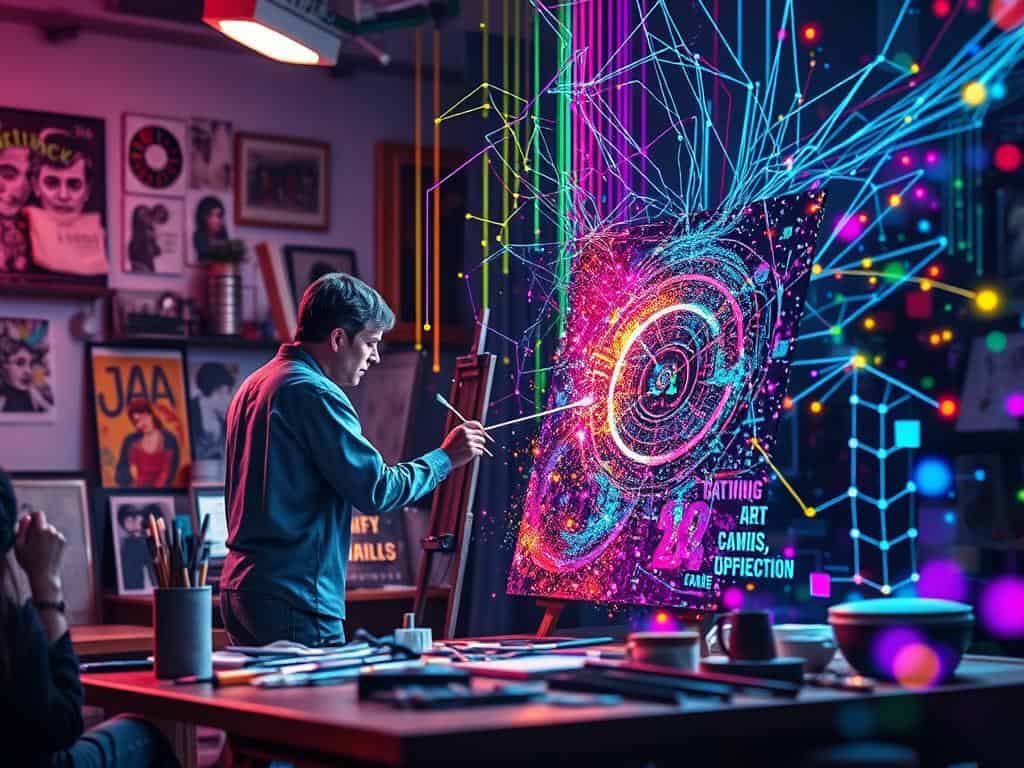
AI Art: Ethical and Philosophical Considerations
AI art is becoming more popular, sparking debates on big issues. These include who really creates the art, who owns it, and how we should treat human artists. As AI-made art becomes more common, these questions become even more important.
Questions of Authorship and Ownership in AI-Generated Art
DALL-E 2 has changed how art is made and seen, with 1.5 million users creating over two million images each day. A key question is about ownership. Who owns an image made by AI when someone gives a prompt? Right now, OpenAI holds the copyright, but users own their prompts. This situation makes us think hard about intellectual property laws for AI art.
Another issue is how AI can reflect biases, like showing women mostly as nurses and men as lawyers. It’s critical to be open about how AI learns to avoid unfair stereotypes. Being fair in AI-made images is also part of the bigger ethics discussion in AI art.
Respecting Human Artists in the Age of AI
We must not forget to respect human artists, even as AI plays a bigger role. Issues like copyright infringement have upset many in the art world. Groups and artists demand their right to protect their work from being copied without permission or pay. DeviantArt’s DreamUp offers a solution to these ethical challenges, aiming for a respectful way to create AI art.
It’s essential to understand the ethical issues in AI art as technology grows. We should aim to keep a balance between new tech and respecting human creativity. Making sure ethics guide the use of AI in art will help both traditional and new forms of art succeed together.
Conclusion
Looking back at the journey of AI in art, it’s more than just a trend. It’s a major shift in our creative world. AI art is changing how we view and create in the digital era. It mixes tech and art in ways that push traditional limits.
Using AI in art brings new chances for working together and finding innovative paths. Yet, it also makes us question the ideas of authorship and authenticity. This debate makes us look again at what creativity and art value mean. It highlights the deep link between purpose and skill in art, tied to human experience.
Embracing AI’s growth in art could make creating more open to everyone. It also encourages working together between artists and tech. The buzz around AI art, together with our rich stories, opens a future of endless creativity. It invites us to imagine what art can become with technology’s help.

