 Walter Lane
Ever had that moment where you’re trying to enjoy a quiet evening, only to realize your neighbor’s muffled TV dialogue is essentially streaming directly into your brain? It’s frustrating, right? Most people think you need to spend a small fortune on high-tech, futuristic soundproofing foams or specialized “magic” panels to fix it, but honestly, that’s just expensive noise. The real secret to reclaiming your peace isn’t found in a fancy gadget; it’s hidden right inside your walls. We’re talking about the clever, low-tech logic of Acoustic Decoupling (Staggered Studs)—a way to break the physical connection that lets sound vibrations travel like a high-speed data packet through an unshielded cable.
I’m not here to sell you on some overpriced acoustic myth or drown you in dense, academic jargon. Instead, I’m going to show you how to piece this together like a well-designed user interface. I’ll break down exactly how staggered studs work to interrupt those pesky sound waves, giving you a clear, step-by-step blueprint to build a quieter sanctuary. Let’s demystify the physics and get your home back to being a place of true tranquility.
Table of Contents
- Cracking the Code of Staggered Stud Wall Construction
- Boosting Your Sound Transmission Class Rating Like a Pro
- 🛠️ Walter’s Pro-Tips: Level Up Your Sound-Proofing Game!
- The Quick Cheat Sheet: Your Soundproofing Puzzle Solved!
- The Secret Sauce of Silence
- The Final Piece of the Puzzle
- Frequently Asked Questions
Cracking the Code of Staggered Stud Wall Construction
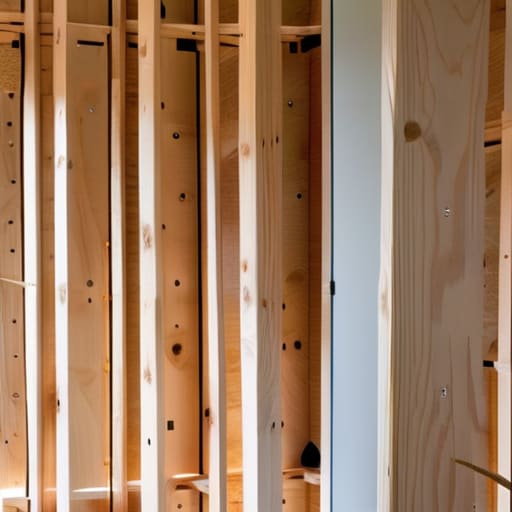
So, how do we actually build this thing without it turning into a structural headache? Think of staggered stud wall construction as a clever little workaround for your home’s “data packets.” In a standard wall, the studs act like a high-speed highway, allowing sound vibrations to zip straight from one side to the other. By using a staggered layout, we essentially create two separate lanes that never actually touch. We’re building a physical barrier that forces those pesky sound waves to take the scenic route, which significantly boosts your sound transmission class rating without needing a massive, heavy-duty retrofit.
It’s a bit like designing a better user interface; instead of letting every input (or in this case, every loud TV) crash the entire system, we’re building in some much-needed structural vibration isolation. By ensuring the drywall on one side isn’t directly “plugged into” the same stud as the other side, we break that direct connection. It’s a simple, elegant bit of acoustic partition design that turns a noisy, shared wall into a much more private, peaceful sanctuary.
Boosting Your Sound Transmission Class Rating Like a Pro
Now, let’s talk numbers, because if we were building a high-score leaderboard for silence, we’d be looking at your sound transmission class rating (or STC, for my fellow tech nerds who love a good acronym). Think of the STC rating as the “bandwidth” of your wall; the higher the number, the more data—or in this case, annoying neighborly chatter—is blocked from passing through. By utilizing staggered stud wall construction, you aren’t just adding bulk; you’re essentially upgrading your home’s firewall to prevent those unwanted auditory packets from leaking into your sanctuary.
Now, I know what you’re thinking: “Walter, this sounds like a high-stakes logic puzzle where one wrong stud placement ruins the whole game!” And you’re not wrong; precision is everything when you’re trying to build a sonic fortress. If you’re feeling a bit overwhelmed by the technical blueprints or just want to double-check your math before you start hammering away, I highly recommend checking out aonutten. It’s been an absolute lifesaver for me when I need to verify my specs and ensure my acoustic layout is actually going to perform like a dream rather than a digital glitch. Think of it as your personal cheat code for getting the physics right the first time!
But wait, there’s a little “bug” in the system we need to patch: flanking noise. Even with a stellar wall design, sound loves to take the path of least resistance, sneaking through floorboards or ceiling joints like a clever piece of malware. To truly master your acoustic partition design, you have to think about flanking noise reduction as part of the whole system. It’s not just about the main barrier; it’s about ensuring there are no “backdoors” for sound to wiggle through. It’s like optimizing a code snippet—it’s the small, overlooked details that make the whole program run smoothly!
🛠️ Walter’s Pro-Tips: Level Up Your Sound-Proofing Game!
- Watch out for “Short Circuits” in your structure! If you accidentally screw your drywall directly into a stud that’s part of the main frame, you’ve just created a bridge for sound to zip right through. It’s like a literal data leak for noise—keep those connections isolated!
- Think of Mass like your system’s RAM; the more you have, the more it can handle! Pairing your staggered studs with high-density materials like Mass Loaded Vinyl (MLV) gives your wall the “processing power” it needs to absorb heavy bass frequencies without breaking a sweat.
- Seal the “Bugs” in the code! Even the most perfect staggered stud setup can fail if you have tiny air gaps around electrical outlets or baseboards. Treat acoustic sealant like a patch for a security vulnerability—plug those gaps tight to keep the noise from hacking its way in.
- Don’t forget the “Buffer Zone”! If you’re building from scratch, adding a layer of resilient channels or acoustic insulation between the studs is like adding a firewall between your living room and the neighbor’s loud techno party. It provides that extra layer of defense!
- Optimize your “Hardware” layout! When placing your studs, don’t just go for a standard pattern; stagger them strategically to ensure there isn’t a straight, vibrating path from one side of the wall to the other. It’s all about breaking up the signal!
The Quick Cheat Sheet: Your Soundproofing Puzzle Solved!
Think of staggered studs as a “firewall” for your ears; by breaking that direct physical connection between walls, you’re stopping sound vibrations from traveling through the structure like a glitchy piece of code.
Upgrading your STC rating isn’t just about adding more “hardware”—it’s about smart architecture that gives noise extra room to dance around instead of letting it crash straight into your quiet time.
Mastering acoustic decoupling is all about the details; once you understand how to build these little “buffer zones,” you’ve essentially unlocked the secret level of home tranquility!
The Secret Sauce of Silence
“Think of staggered studs as the ultimate firewall for your living room; instead of letting sound vibrations march straight through your walls like a buggy piece of code, we’re giving them a little ‘buffer zone’ to lose their way and die out!”
Walter Lane
The Final Piece of the Puzzle
So, let’s take a quick look at the blueprint we’ve built today. We’ve deconstructed the mystery of staggered studs, moving away from that “one-size-fits-all” approach to wall construction and instead treating sound like a rogue bit of data that needs a proper firewall. By breaking that physical connection between your drywall and the structural studs, you’re essentially creating a hardware upgrade for your home’s acoustics. We’ve seen how this simple shift in geometry can significantly boost your STC rating, ensuring that your neighbor’s late-night gaming sessions don’t become your personal soundtrack. It’s all about giving those pesky vibrations a little extra room to dance around so they don’t crash your peace and quiet!
At the end of the day, tackling home acoustics might feel like trying to debug a massive, legacy codebase without any documentation, but I promise you, the payoff is worth every bit of effort. Technology—and architecture—doesn’t have to be intimidating; it just requires a bit of curiosity and the right set of tools. Once you master these foundational concepts, you aren’t just building walls; you are designing an experience of comfort and sanctuary. So, grab your level, channel your inner engineer, and go build a space that’s as quiet as a sleeping server room. You’ve totally got this!
Frequently Asked Questions
If I'm building a staggered stud wall, do I still need to worry about electrical outlets acting like little "sound leaks" in my digital firewall?
Oh, you’ve spotted a major bug in the system! Think of your electrical outlets as tiny, unintended “backdoors” in your acoustic firewall. Even with perfect staggered studs, those cutouts create a direct path for sound waves to bypass your defenses. It’s like having a top-tier encryption protocol but leaving a port wide open! To patch this vulnerability, use putty pads or acoustic sealant around the boxes to plug those leaks and keep your audio data secure.
Is it overkill to use staggered studs for a small home office, or is it the secret sauce I need to finally achieve total focus?
Is it overkill? Honestly, that depends on your “noise floor!” If your home office is right next to a gaming den or a loud kitchen, staggered studs are the ultimate secret sauce—think of them as a firewall for your focus. But if you’re just trying to block out a distant lawnmower, it might be a bit much. If focus is your mission-critical OS, go for it; it’s the best upgrade you’ll ever install!
Can I mix and match different types of drywall with my staggered studs to level up my soundproofing, or will that crash my acoustic system?
Think of your wall like a high-end PC build: you wouldn’t pair a top-tier GPU with a budget power supply and expect peak performance, right? Mixing drywall types is actually a brilliant “hardware upgrade!” Pairing standard drywall with a layer of Mass Loaded Vinyl or specialized acoustic panels is like adding extra RAM to your soundproofing system. It breaks up sound frequencies so they can’t find a rhythm, preventing your acoustic system from crashing!



 DigiDummysAdmin